
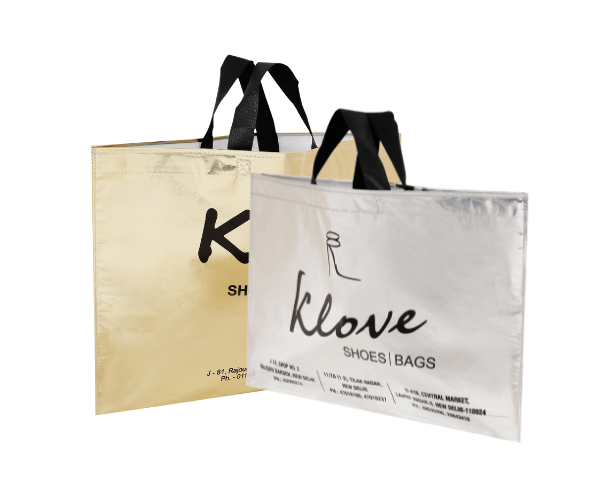
Non-woven bags are made from a bonded fabric of synthetic fibers, such as polypropylene, created through mechanical, thermal, or chemical processes instead of weaving or knitting. They are known for being lightweight, durable, and often recyclable, making them a popular alternative to plastic bags for shopping, promotions, and packaging. These bags can be customized in various sizes, shapes, and designs, with a wide range of thicknesses (GSM) available to suit different needs. Manufacturing and materials Fiber formation: Polymer chips or fibers are processed and formed into a web-like structure. Bonding: The web of fibers is bonded together using methods like heat, ultrasonic vibrations, or chemical adhesives to create a continuous sheet of non-woven fabric. Raw material: The most common material is polypropylene (PP) non-woven fabric, with thicknesses typically ranging from 20 to 120 gsm (grams per square meter). Finishing: The fabric is then cut and sealed, often by heat or ultrasonic welding, and can be printed with logos and designs. Key characteristics and advantages Durability: They are strong, tear-resistant, and can carry a significant amount of weight, especially when using higher gsm fabric. Eco-friendly: Many are made from recyclable materials and can be reused multiple times, which helps reduce plastic waste. They are also often made without emitting toxic gases when disposed of, unlike some plastics. Water-resistant: They offer good water resistance, and this can be further improved by adding a lamination layer. Customizable: They are highly customizable in terms of color, size, shape, and design, making them excellent for promotional purposes. Lightweight: Despite their strength, they are lightweight and easy to carry. Common types D-cut bags: Feature soft handles and are suitable for general shopping. W-cut (grocery) bags: Often have a flat bottom and are designed to resemble traditional grocery bags. Loop handle bags: Come with attached loop handles and often a gusseted bottom to provide more storage space. Box bags: Have a more structured, box-like shape for increased capacity and stability. Limitations Not fully biodegradable: Unlike natural fibers, they do not decompose easily on their own. Lower tensile strength: They are not as strong as woven bags and may not be suitable for applications requiring extreme durability, such as in the construction sector.

Tiruppur
08048034603
+919942337053
 Chat with us
 Chat with us