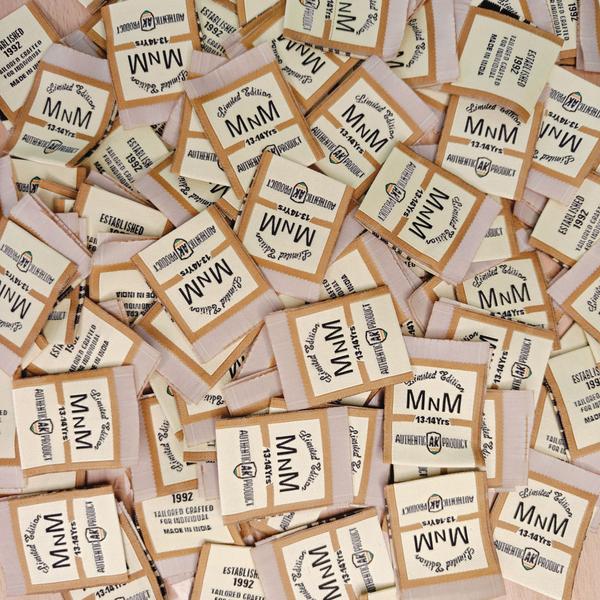
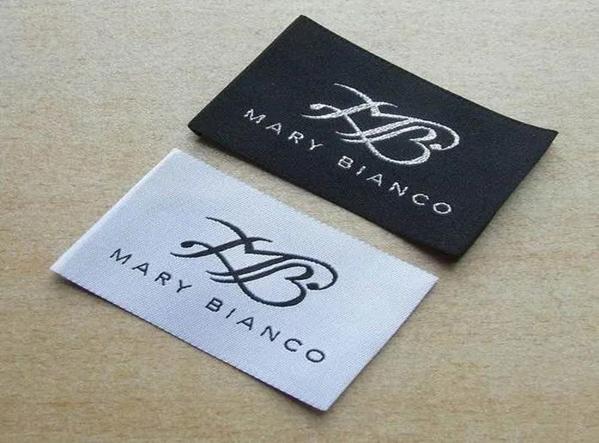
Woven labels are identification tags created by weaving threads together to form a design, logo, or text directly into the fabric. They are known for being soft, durable, and having a more luxurious feel than printed labels. Key details include the type of material (like damask or satin), thread density, and finishing style, which determine the label's appearance, texture, and detail. Construction and materials Method: Threads are interlaced on a specialized loom, with the design created by the weft yarns, unlike printed labels where a design is applied on top of a material. Materials: Typically made from cotton or polyester threads, which can be synthetic or natural. Sustainability: Some labels can be made from recycled materials, like polyester from recycled bottles. Key details and terminology Denier: This refers to the thickness of the individual threads. A lower denier means a finer thread, allowing for more intricate and detailed designs. Density: This is the measurement of how tightly the threads are woven. Higher density results in a more solid and clear artwork. Types of weave: Damask: Known for a very smooth feel due to tightly woven, fine polyester threads. It is prized for high-definition detail. Satin: Uses a lustrous, velvety polyester thread. It has a soft sheen and is often used for a refined look. Color: Designs are made with individual colored threads. It's best to avoid more than 12 colors and gradients or photographs, as each color requires a different thread. Label finishes Cut-fold: Features clean edges and a seamless integration into the final product. This is often a premium option. Other options: There are many ways to finish a label, including center-fold, end-fold, or a simple cut, which affects how it is sewn onto the garment.

Tiruppur
08048034603
+919942337053
 Chat with us
 Chat with us