
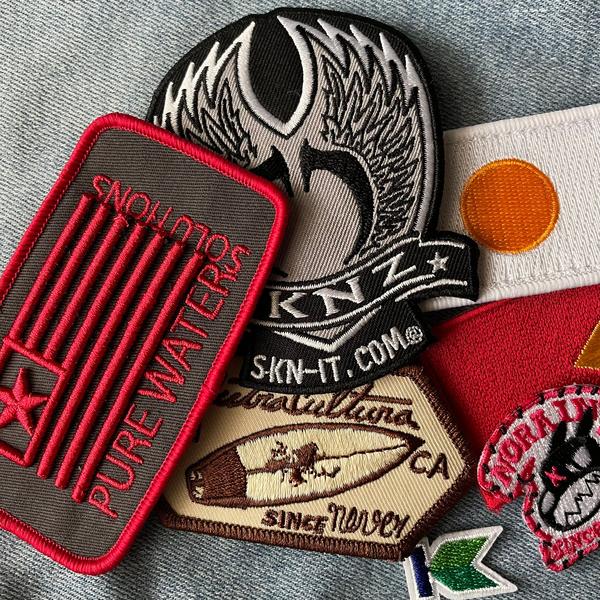
An embroidery patch is a decorative fabric piece made by stitching colorful threads onto a fabric backing to create a raised, textured design. These patches are known for their durability and classic look, and they can be attached to clothing or other items by sewing or by using a heat-activated adhesive backing for an iron-on application. They are used for uniforms, branding, and personal expression, and they are made using either manual or high-speed computerized embroidery machines. Construction and appearance Fabric backing: A piece of material, often twill or felt, serves as the base for the embroidery. Stitched threads: Thick embroidery threads are stitched onto the fabric to form the design. Textured design: The stitching creates a raised, dimensional, and tactile appearance, which gives the patch a classic, handcrafted feel. Coverage: Patches can have 100% embroidery, where the entire fabric backing is covered, or less than 100%, where the backing is visible in some areas. How to use and apply Sew-on: The patch can be sewn directly onto a garment or item using a needle and thread. Iron-on: Patches with a heat-activated adhesive backing can be applied using a household iron, which melts the adhesive to bond the patch to the fabric. Other methods: Patches can also be attached with Velcro or other fasteners. Uses and applications Identification: Used on uniforms for military, emergency services, and other organizations to denote rank, job, or team affiliation. Branding: A popular way for companies to display logos on merchandise. Team and group identity: Commonly used by sports teams, clubs, and youth organizations. Personal expression: A decorative way for individuals to customize clothing, accessories, and bags. Key features Durability: Embroidery is durable, though threads can eventually fray or fade over time with heavy use or washing. Flexibility: Unlike direct embroidery, patches can be removed and reapplied to different items. Visuals: Best suited for bold, simple designs with clean lines. More detailed or photographic designs are typically better suited for printed patches.

Tiruppur
08048034603
+919942337053
 Chat with us
 Chat with us